Beyond the Blueprint: Key Trends and Opportunities in the Heavy Construction Equipment Market (2021-2030)
The global heavy construction equipment market, valued at a substantial $176.2 billion in 2020, is on a robust growth trajectory, projected to reach $273.5 billion by 2030. This expansion represents a compound annual growth rate (CAGR) of 4.4% from 2021 to 2030, driven by a confluence of factors across both public and private sectors.
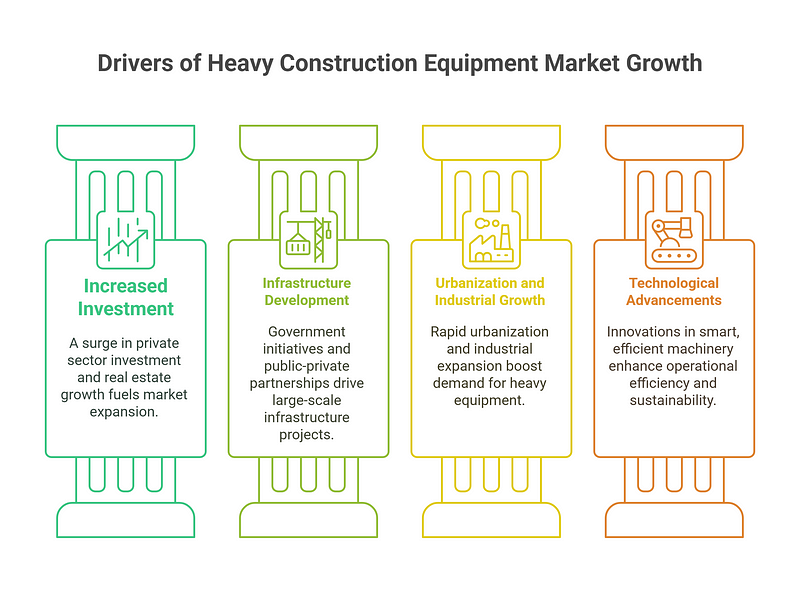
Key Drivers Fueling Expansion
Several pivotal factors are contributing to this optimistic outlook:
- Increased Investment: A surge in private sector investment, coupled with robust growth in the real estate sector and improving economic conditions globally, is a primary catalyst.
- Infrastructure Development: Governments worldwide are prioritizing large-scale infrastructure projects. Initiatives like the U.S. President’s $2 trillion infrastructure plan announced in March 2021 highlight a strong commitment to public-private partnerships and development.
- Urbanization and Industrial Growth: Rapid urbanization, particularly in emerging economies, is leading to increased expenditures in the building and manufacturing industries, boosting demand for heavy equipment.
- Technological Advancements: Leading market players are focusing on manufacturing smart, internet-connected, fuel- and energy-efficient construction machinery, which not only enhances operational efficiency but also aligns with sustainability goals.
Overcoming Hurdles: Restraints and Opportunities
Despite the promising growth, the market faces certain restraints, most notably the high purchasing and maintenance costs associated with heavy construction equipment. The COVID-19 pandemic also initially disrupted production due to lockdowns, though a recovery was anticipated by early 2022.
However, these challenges are outweighed by significant opportunities:
- Innovation in Equipment: The ongoing development of smart, internet-connected, fuel- and energy-efficient machinery presents a lucrative avenue for market expansion.
- Governmental Infrastructure Spend: Continued and increased infrastructure investments from governments across various countries will sustain demand.
- Diverse Applications: The widespread utility of heavy construction equipment in critical applications such as earthmoving, mining, and material handling ensures consistent demand across multiple sectors.
Leading the Charge: Key Market Players
The competitive landscape of the heavy construction equipment market is dominated by several global leaders, including:
- Caterpillar Inc.
- CNH Industrial N.V.
- Deere & Company
- Doosan Infracore Co Ltd.
- Hitachi Construction Machinery Co. Ltd.
- J C Bamford Excavators Ltd.
- Komatsu Ltd.
- Liebherr International AG
- Volvo Group
- XCMG Group
These companies are at the forefront of innovation and market penetration, shaping the future of the industry.
Regional Dynamics
Geographically, the market analysis spans across key regions:
- North America: Comprising the U.S., Canada, and Mexico.
- Europe: Including the UK, France, Germany, Italy, and the Rest of Europe.
- Asia-Pacific: Featuring prominent markets like China, Japan, India, South Korea, and the Rest of Asia-Pacific.
- LAMEA: Encompassing Latin America, the Middle East, and Africa.
Each of these regions presents unique opportunities and challenges, contributing to the overall market growth from 2021 to 2030.
More Reports:
Parametric Insurance Market
Green Bonds Market
Digital Remittance Market
Banking as a Service Market
Comments
Post a Comment